Security
How to spot a scam call, text, or email
You get a text from your bank saying there's been suspicious activity on your account. Or a phone call from someone claiming to be from the tax office. Or an email that says your package couldn't be delivered.
Your pulse quickens. You want to fix it immediately.
That urgency is exactly what scammers are counting on. The single most effective thing you can do is pause. Don't click, don't call back, don't reply. Just stop for 60 seconds and look for these five signs.
1. It creates urgency
Real organisations don't threaten you into acting immediately. If a message says "act within 24 hours or your account will be closed" or "respond now to avoid prosecution," that's a scam. Genuine businesses give you time. They send reminders, not threats.
2. It asks you to click a link or call a number
Scam texts and emails almost always include a link. The link might look real — it might even include your bank's name — but it leads to a fake website designed to steal your login details.
Scam calls often ask you to press a number ("press 1 to speak to a representative") or call a specific phone number. Instead: hang up and call the organisation directly using the number on their official website or on the back of your card.
3. It comes from an unexpected sender
Look at who actually sent the message. In emails, the sender's address is often a random string of characters or a slightly misspelled domain (like "arnazon.com" instead of "amazon.com"). In texts, it might come from a regular phone number rather than the company's name.
If you weren't expecting to hear from this company, treat it with suspicion.
4. It asks for personal information
Your bank will never ask for your full password, your PIN, or a one-time code by text, email, or phone call. Neither will the tax office, your internet provider, or Apple. If someone asks for this information, they're not who they say they are.
5. It sounds too good to be true
"You've won a prize." "You're owed a refund." "A package you didn't order is waiting." If you didn't enter a competition, request a refund, or order a delivery, these messages are almost certainly fake.
What to do when something feels off
- Don't click any links in the message.
- Don't call the number provided in the message.
- Don't reply — even to say "stop." Replying confirms your number is active.
- Look up the real number for the company (from their website or your card) and call them to verify.
- Delete the message once you've confirmed it's a scam.
If you've already clicked a link or given out information, don't panic. Change your password for that account immediately, contact your bank if financial details were involved, and monitor your accounts for the next few weeks.
A simple rule to remember
Legitimate companies give you choices. Scammers give you deadlines. If you feel rushed, that's the signal to slow down.
Want the full guide?
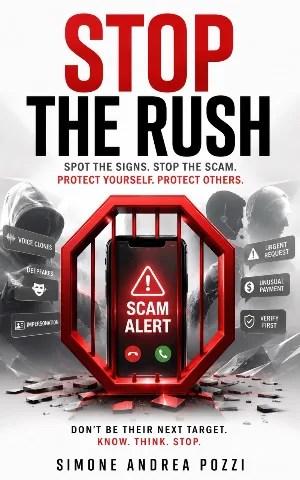
Stop the Rush
Confidently recognise, pause, verify, and respond safely to scams across calls, texts, emails, and social media — using simple, repeatable habits.
Available on Amazon Kindle
Related reading